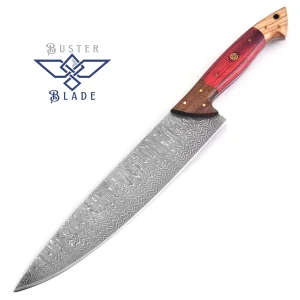
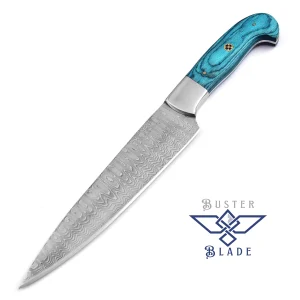
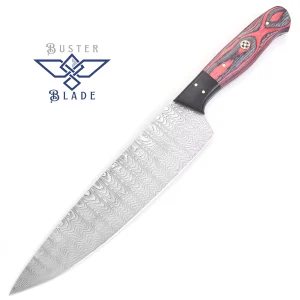
Introduction to Damascus Kitchen Knives
A kitchen knife affects every meal you cook. You notice it while slicing onions, trimming chicken, or chopping herbs after work. A dull blade slows you down and tires your wrist. Tomatoes collapse before the edge cuts through the skin.
I noticed the difference immediately after switching to a Damascus chef knife. Prep became smoother and faster. Carrots snapped cleanly instead of cracking apart. Basil stayed greener after chopping because the blade cut instead of crushing the leaves.
Most people first notice the flowing steel pattern on Damascus kitchen knives. The blade reflects light differently from ordinary stainless steel. But appearance alone does not explain why cooks keep reaching for them every day. The real value comes from cutting feel, edge retention, and balance.
What Makes Damascus Steel Knives Unique
Damascus kitchen knives use layered steel around a hard cutting core. After polishing and acid treatment, flowing patterns appear across the blade surface. These patterns form naturally during forging instead of being printed on the steel.
Many Damascus chef knives measure close to 2 mm near the spine. Thin geometry reduces drag while cutting onions, potatoes, and brisket. You use less force during prep work and gain better control over every cut.
History and Craftsmanship of Damascus Steel
The name “Damascus steel” traces back centuries to blades known for strength and sharp cutting edges. Modern Damascus kitchen knives use updated metallurgy, but the layered steel concept still remains.
A maker heats, compresses, shapes, hardens, and polishes the steel carefully. Small details matter during production. Smooth spine finishing and even bevels improve comfort during long prep sessions.
Why Damascus Kitchen Knives Are Popular Among Chefs
Professional kitchens demand speed and precision. Thin Damascus blades reduce wrist fatigue because they move through food with less resistance.
Sharp edges also improve presentation. Herbs stay fresher after chopping, and meat slices remain cleaner instead of tearing apart under pressure.
What Is a Damascus Kitchen Knife?
Understanding Damascus Steel Construction
A Damascus kitchen knife combines layered outer steel with a harder center core. The outer layers improve durability while the core handles edge performance.
Common constructions include 33-layer, 67-layer, and 110-layer Damascus steel. Heat treatment affects cutting performance more than layer count alone.
Real Damascus Steel vs Pattern-Etched Blades
Some cheap knives imitate Damascus appearance using laser-etched patterns on ordinary stainless steel. These blades often lose sharpness quickly during kitchen use.
Reliable sellers usually mention core steel, hardness rating, and blade thickness clearly. Quality finishing also reveals authentic craftsmanship.
Layers, Folding Techniques, and Blade Patterns
Different forging methods create patterns such as ladder, feather, raindrop, and ripple designs. Handmade blades usually show more natural variation than factory-made models.
Pattern appearance alone does not improve performance. Grind quality and heat treatment matter far more during real cutting work.
Common Damascus Steel Core Materials
Core steel controls sharpness, corrosion resistance, and edge retention. Different steels suit different maintenance habits and cooking styles.
VG10 Steel
VG10 balances sharpness, stain resistance, and edge retention well. Most VG10 Damascus knives harden between 60 and 61 HRC, which works well for daily kitchen use.
AUS-10 Steel
AUS-10 offers strong toughness with reliable corrosion resistance. Many home cooks prefer it because sharpening feels easier than harder premium steels.
1095 & 15N20 Steel
This steel combination appears often in handmade high-carbon Damascus knives. 1095 provides hardness while 15N20 creates strong contrast between layers.
High Carbon Stainless Steel
High carbon stainless steel combines edge retention with easier maintenance. You get strong cutting performance without worrying constantly about rust.
Benefits of Damascus Kitchen Knives
Exceptional Sharpness and Edge Retention
Thin Damascus edges cut tomatoes, herbs, and onions cleanly without crushing them. Many Damascus kitchen knives stay sharp for months under normal home use.
Corrosion and Rust Resistance
Most modern Damascus kitchen knives use stainless steel construction. Simple habits like washing and drying the blade after use protect the edge for years.
Durability and Blade Strength
Layered construction balances hardness with toughness. Good Damascus knives handle daily kitchen work well when used properly.
Precision Cutting Performance
Thin edges improve slicing accuracy. Uniform vegetable cuts cook more evenly and create cleaner food presentation.
Beautiful Handcrafted Appearance
Every forged Damascus blade develops slightly different steel patterns. Handmade knives often show more natural visual character than machine-produced models.
Balanced Weight and Comfortable Handling
A balanced knife feels controlled instead of heavy. Most quality Damascus chef knives balance near the pinch grip to reduce wrist fatigue.
Types of Damascus Kitchen Knives
Damascus Chef Knife
An 8-inch Damascus chef knife handles most kitchen jobs. You can chop herbs, dice onions, trim meat, and crush garlic using one blade.
Damascus Santoku Knife
Santoku knives use flatter edges designed for push cutting. They work especially well for vegetables and boneless proteins.
Damascus Nakiri Knife
Nakiri knives focus mainly on vegetable prep. Their flat edge creates clean cuts through cabbage, carrots, and onions.
Damascus Cleaver
A Damascus cleaver handles thicker vegetables and larger cuts of meat. The wide blade also helps transfer chopped ingredients into pans quickly.
Damascus Utility Knife
Utility knives usually range between 4 and 6 inches. They work well for sandwiches, citrus, apples, and smaller proteins.
Damascus Paring Knife
Paring knives handle detail work such as peeling fruit or trimming strawberries. Small blades improve precision during delicate tasks.
Damascus Bread Knife
Bread knives use serrated edges to cut through crust without crushing soft interiors. A sharp bread knife leaves cleaner slices behind.
Damascus Carving Knife
Carving knives use long narrow blades designed for brisket, turkey, and roast beef. Thin geometry reduces tearing during slicing.
Damascus Steak Knives
Sharp steak knives improve the eating experience greatly. Damascus steak knives cut through ribeye and filet smoothly without shredding fibers.
Damascus Knife Sets
Knife sets help create a consistent kitchen setup. Smaller high-quality sets usually work better than oversized sets filled with rarely used pieces.
Choosing the Right Damascus Kitchen Knife
Selecting the Right Blade Length
An 8-inch chef knife works best for most kitchens because it balances versatility with control. Smaller blades feel easier for beginners, while larger blades suit heavy prep work.
Choosing the Best Knife Shape for Your Cooking Style
Curved chef knives support rocking cuts, while flatter Santoku and Nakiri knives suit push cutting. Choosing the right shape improves prep speed and comfort.
Full Tang vs Partial Tang Construction
Full tang knives extend steel through the entire handle. This improves balance, durability, and stability during heavy prep sessions.
Western vs Japanese Damascus Knives
Western knives often feel heavier with thicker blade geometry. Japanese Damascus knives usually feel lighter and move through vegetables more smoothly.
Choosing Between Single Bevel and Double Bevel
Double bevel knives sharpen on both sides and suit most home cooks. Single bevel knives create precise cuts but require more sharpening skill.
Handle Materials and Grip Options
Handle material affects comfort, grip, and moisture resistance. Long prep sessions become easier when the handle feels natural in your hand.
Pakka Wood Handles
Pakka wood combines natural wood with resin under pressure. It offers better moisture resistance than untreated wood.
Resin Handles
Resin handles resist water extremely well. They also allow makers to create bold color combinations and patterns.
Micarta Handles
Micarta provides excellent grip even with wet hands. Many professional cooks prefer it because it handles heavy kitchen use well.
Olive Wood Handles
Olive wood handles show rich grain patterns and natural warmth. Occasional oiling helps prevent the wood from drying out.
G10 Handles
G10 uses fiberglass and resin compressed together. The material resists moisture, heat, and kitchen chemicals very well.
Damascus Kitchen Knives for Different Uses
Professional Chef Applications
Professional cooks rely on sharp dependable knives during long prep sessions. Thin Damascus blades reduce fatigue while improving cutting speed.
Home Cooking and Everyday Meal Prep
A Damascus chef knife handles most daily kitchen tasks easily. You spend less effort fighting dull edges during dinner prep.
Meat Cutting and Slicing
Long slicing knives preserve meat texture better during carving. Thin edges create cleaner brisket and turkey slices with less tearing.
Vegetable Preparation and Precision Chopping
Nakiri and Santoku knives perform especially well during vegetable prep. Thin edges create cleaner cuts through onions, carrots, and herbs.
Sushi and Fine Culinary Work
Sushi preparation demands thin precise cuts. Damascus blades help preserve fish texture and improve presentation during plating.
Outdoor and BBQ Food Preparation
Outdoor cooking often involves trimming meat and slicing brisket. Long Damascus carving knives perform especially well during barbecue prep.
Features to Look for in a Quality Damascus Knife
Blade Hardness and HRC Ratings
Most quality Damascus knives range between 58 and 62 HRC hardness. Around 60 HRC usually balances sharpness with durability best.
Edge Geometry and Sharpness
Thin geometry improves cutting feel greatly. Thick blades create more drag while slicing vegetables and proteins.
Forged vs Stamped Damascus Knives
Forged knives form under heat and pressure from thicker steel stock. They usually feel stronger and more balanced during heavy use.
Handcrafted vs Machine-Made Knives
Handcrafted knives often show finer finishing details and more natural pattern variation. Machine-made knives offer greater production consistency.
Blade Finish and Hammered Patterns
Hammered finishes reduce food sticking during slicing. Small dimples create air pockets between the blade and ingredients.
Spine, Heel, and Tang Construction
Smooth spine and heel finishing improve comfort during long prep sessions. Rough edges quickly become uncomfortable during repetitive cutting.
Weight Distribution and Ergonomics
Balance matters more than total weight. A properly balanced knife feels controlled and reduces wrist strain over time.
Are Damascus Kitchen Knives Worth It?
Performance Compared to Standard Stainless Steel Knives
Cheap stainless knives often dull within weeks. Damascus kitchen knives usually stay sharper longer because of harder core steel and thinner geometry.
Longevity and Value Over Time
A quality Damascus knife can last decades with proper care. Spending more initially often saves money compared to replacing cheap knives repeatedly.
Appearance vs Practical Performance
Steel patterns look attractive, but performance matters more during real kitchen use. Heat treatment and edge geometry affect cutting quality most.
Why Professional Chefs Prefer Damascus Knives
Professional cooks spend hours holding knives every day. Thin sharp Damascus blades improve speed while reducing fatigue during long shifts.
How to Care for Damascus Kitchen Knives
Cleaning and Drying Best Practices
Wash Damascus knives by hand using warm water and mild soap. Dry the blade immediately afterward to protect the edge.
Preventing Rust and Corrosion
Even stainless Damascus steel benefits from proper maintenance. Quick cleaning after use prevents moisture damage over time.
Proper Storage Methods
Magnetic strips, knife blocks, and blade guards protect edges better than loose kitchen drawers. Proper storage also improves safety.
Sharpening Damascus Steel Knives
Whetstones produce the best sharpening results. A 1000-grit stone handles basic sharpening while higher grits refine the edge further.
Honing vs Sharpening
Honing realigns the edge between sharpening sessions. Sharpening removes steel to create a fresh cutting edge.
Oiling and Long-Term Maintenance
High-carbon Damascus knives benefit from occasional food-safe mineral oil. This protects exposed steel during long-term storage.
Mistakes to Avoid With Damascus Knives
Avoid dishwashers, frozen food, and hard bones. Glass cutting boards also dull sharp edges very quickly.
How to Identify Authentic Damascus Steel Knives
Signs of Genuine Damascus Steel
Real Damascus steel shows layered patterns that continue naturally across the blade. Quality makers also provide detailed steel specifications.
Fake Damascus Patterns to Avoid
Laser-etched patterns often look perfectly repeated across the blade surface. Extremely low prices also raise suspicion quickly.
Checking Steel Composition and Layer Count
Reliable sellers mention core steel type, hardness rating, and layer count clearly. Missing specifications often signal poor quality production.
Importance of Reputable Craftsmanship
Good craftsmanship affects cutting performance more than marketing claims. Proper finishing and heat treatment matter greatly during real kitchen use.
Comparing Damascus Kitchen Knives
Damascus Steel vs Stainless Steel Knives
Damascus knives usually offer better edge retention and thinner geometry. Standard stainless knives often cost less but dull faster.
Damascus Steel vs Carbon Steel Knives
Carbon steel develops patina and sharpens easily but requires more maintenance. Damascus stainless steel offers easier care for daily kitchens.
Japanese Damascus Knives vs German Knives
Japanese Damascus knives often feel lighter and sharper. German knives usually feel heavier and more durable during rough prep work.
Handmade Damascus Knives vs Factory-Made Knives
Handmade knives show more pattern variation and craftsmanship detail. Factory-made knives offer more consistency and lower production cost.
Frequently Asked Questions About Damascus Kitchen Knives
What Is the Best Damascus Kitchen Knife for Beginners?
An 8-inch Damascus chef knife works best for beginners because it handles nearly every kitchen task comfortably.
Are Damascus Kitchen Knives Good for Everyday Use?
Yes. Most quality Damascus kitchen knives handle daily meal prep extremely well when maintained properly.
Do Damascus Knives Rust?
High-carbon Damascus knives can rust if left wet. Stainless Damascus knives resist corrosion better but still require cleaning and drying.
How Long Do Damascus Knives Stay Sharp?
Many Damascus kitchen knives stay sharp for several months under normal home use. Sharpening frequency depends on cutting habits and board material.
Can Damascus Knives Cut Bones?
Thin Damascus kitchen knives should not cut hard bones. Use a butcher cleaver for heavy bone work instead.
Are Damascus Knives Dishwasher Safe?
Dishwashers damage both steel and handles through heat, detergent, and impact. Hand washing protects the knife far better.
What Is the Best Steel for Damascus Kitchen Knives?
VG10 and AUS-10 remain popular choices because they balance sharpness, edge retention, and corrosion resistance well.
Why Are Damascus Knives Expensive?
Layered construction, heat treatment, finishing, and skilled labor increase production time. Handmade knives require even more craftsmanship.
Are Handmade Damascus Knives Better?
Many handmade knives show finer finishing and stronger visual character. Performance still depends heavily on heat treatment and grind quality.
What Is the Ideal Blade Length for a Chef Knife?
Most home cooks perform best with an 8-inch chef knife because it balances control with versatility.
Why Buy Damascus Kitchen Knives From Us
Premium Materials and Craftsmanship
We use quality steel, controlled heat treatment, and dependable construction methods. Every knife focuses on real kitchen performance.
Hand-Inspected Quality Standards
Each knife passes inspection before shipping. We check edge quality, handle fitting, and finishing details carefully.
Razor Sharp Ready-to-Use Blades
Every knife arrives sharpened and ready for immediate kitchen use. You can start prep work straight from the box.
Secure Packaging and Fast Shipping
Strong packaging protects the blade during transit. Fast shipping helps you receive your knife quickly and safely.
Customer Support and Satisfaction Guarantee
We help customers choose the right knife based on cooking habits and experience level. Reliable support matters after the sale as well.
Final Thoughts on Damascus Kitchen Knives
A good Damascus kitchen knife changes daily cooking noticeably. Prep becomes smoother, faster, and less tiring. You spend less time fighting dull edges and more time enjoying the process.
The best Damascus knife is the one you naturally reach for every evening because it feels dependable in your hand. That trust matters more than flashy marketing or exaggerated claims.